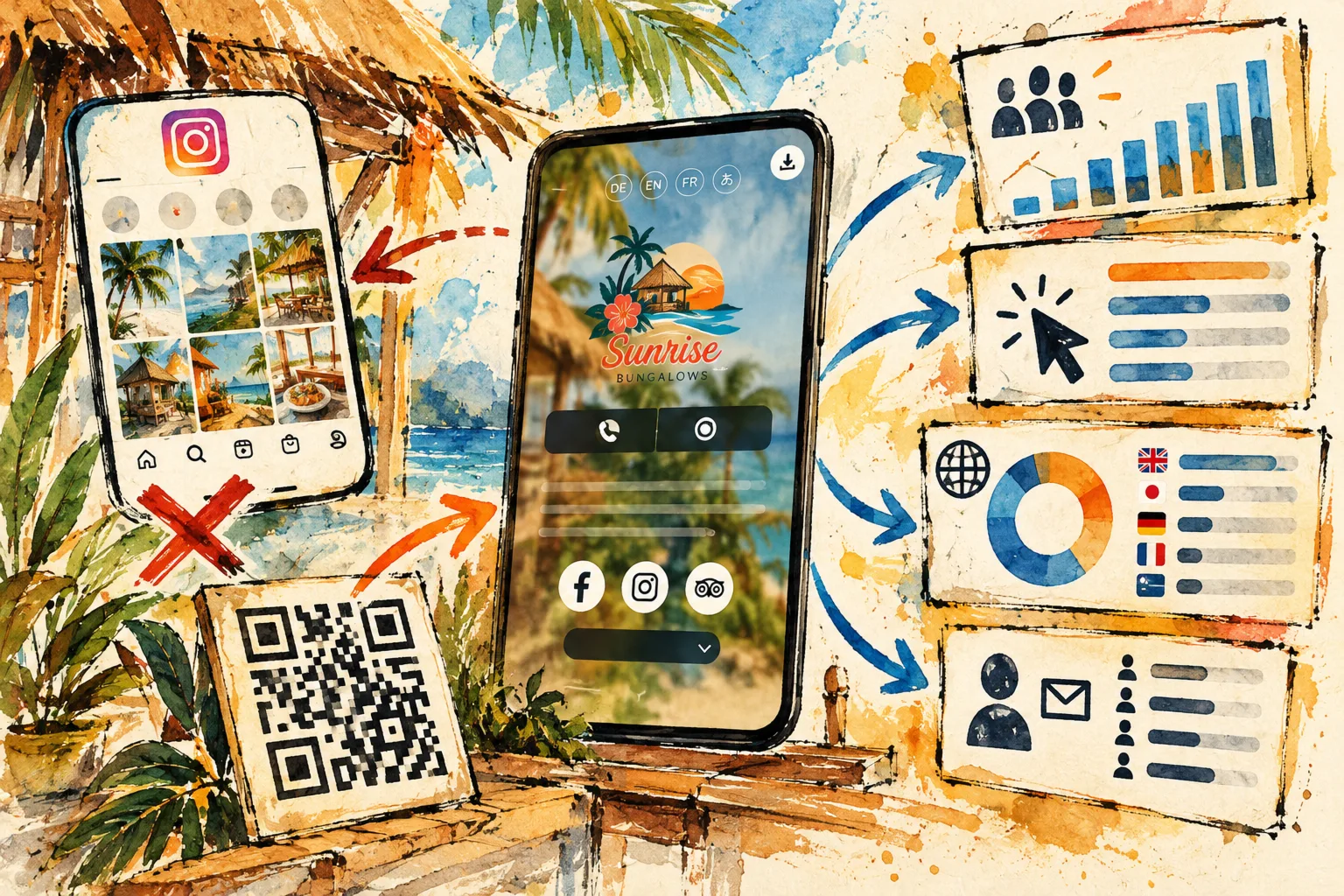
Why Instagram Isn't a Substitute for Your Business Website
Instagram is a great place to show your work, tell your story, and stay connected with followers. For restaurants, craftspeople, and tourism businesses, it is often one of the easiest ways to get noticed.
But ask yourself one question: what happens when someone simply wants your opening hours, your services, or a way to contact you?
An Instagram profile and a website do different jobs. Here is why they work better together.
1. Essential information gets lost in the feed
Someone sees a photo of your restaurant and wants to read the menu, check the opening hours, and make a reservation. Where should they look? Your bio? A highlight? A post you shared months ago?
That journey may feel natural to a regular Instagram user, but it can quickly become frustrating when information is scattered.
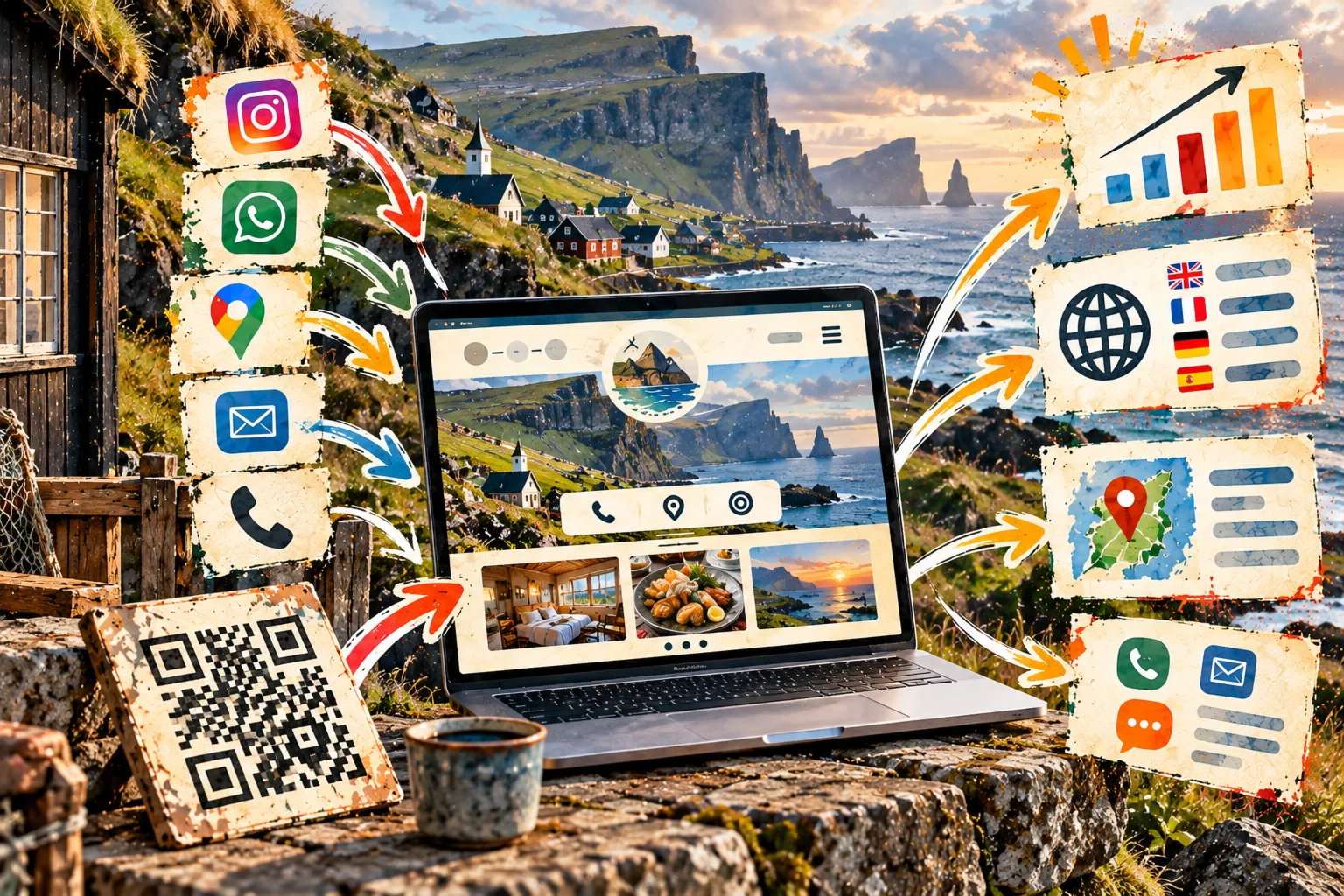
On your own web page, you can arrange the essentials around what visitors actually need: menu, hours, location, booking, and contact details in one place.
2. Not every customer uses social media
Some people reach you through Google, a QR code, a recommendation, or a local directory. Others simply want an answer without opening a social app.
A public web page gives your business a more universal place to send them. It is easy to share by email, text, business card, or poster.
A website does not guarantee high search rankings, but it does give people a way to find you outside a particular social platform.
3. Keep a stable destination even when platforms change
Social platforms change their interfaces, rules, reach, and features. Your business cannot control all of those decisions.
Having a dedicated web address provides a consistent destination to share with customers, whatever social network you use today or next year.
You can keep posting on Instagram, TikTok, or Facebook while directing interested visitors to a clearer place to take the next step.
4. A long list of links isn't always helpful
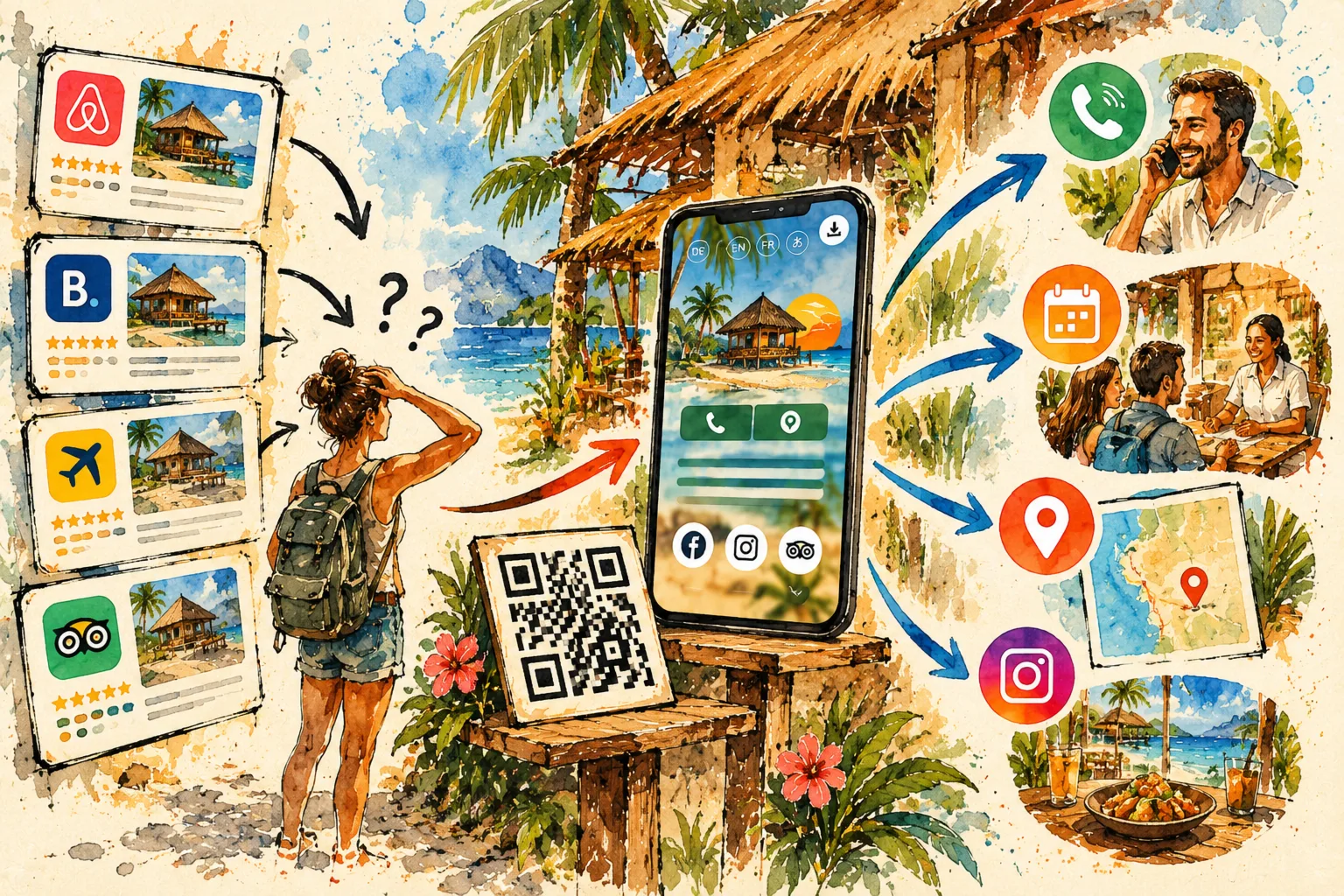
Adding ten or twenty links to your bio might solve a technical problem while creating a new one: people must guess which link is right for them.
Think of a small guesthouse. One visitor wants to book a room, another wants to check prices, and another needs local activity information. A well-organized page helps each person find a relevant next step.
The goal is not to display as many buttons as possible. It is to make it easier to go from a question to an answer.
5. Give people options without relying on a single intermediary
Booking platforms, delivery apps, and appointment tools are genuinely useful. You don't have to stop using them.
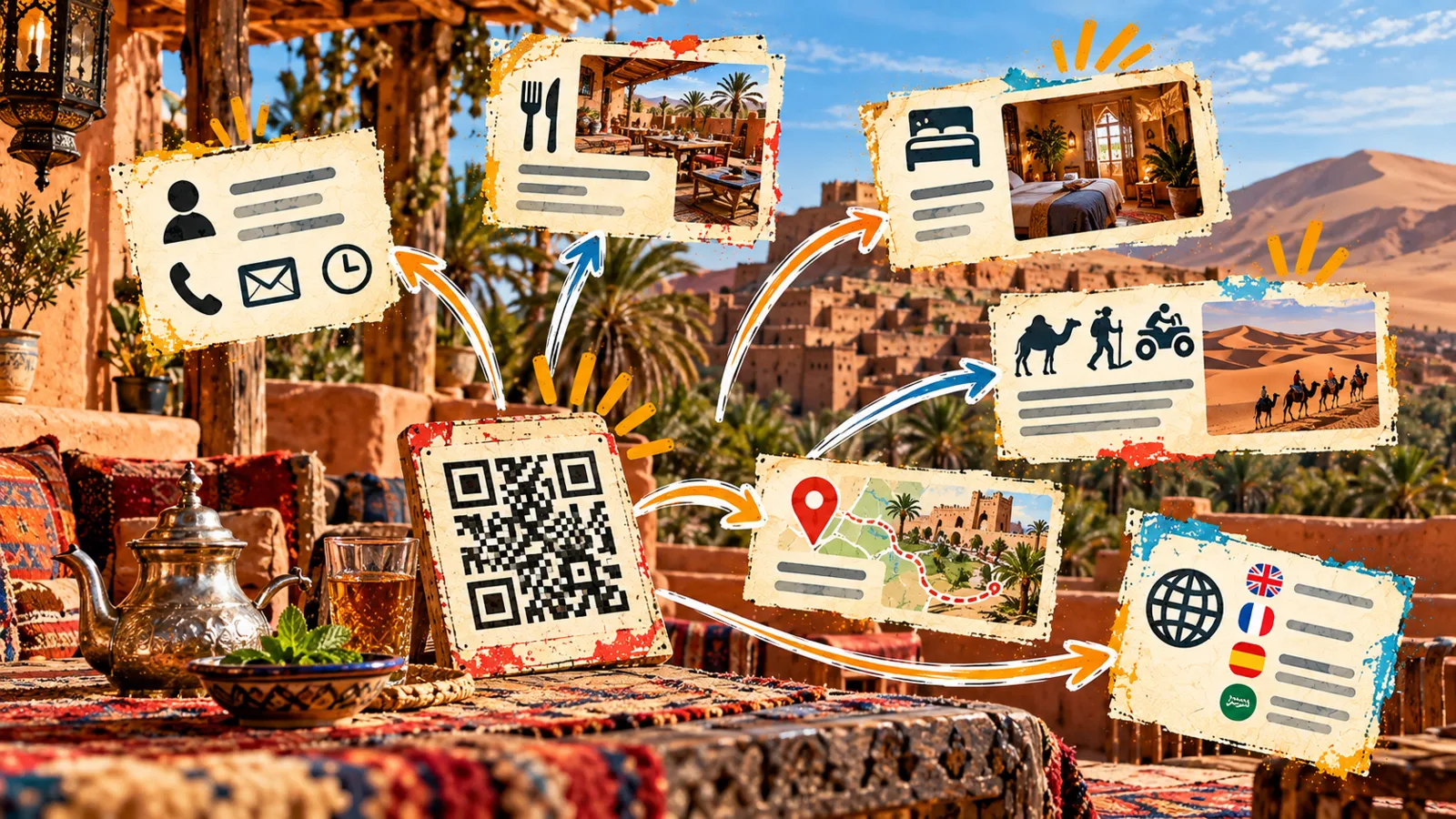
But they don't need to be your only gateway. A web page lets you present several paths: book through a partner, call directly, send a message, explore a map, or discover other services.
If you change booking providers, you can update the link on your page instead of reprinting everything with a QR code.
6. Make your QR code lead somewhere useful
A QR code on a shop window, restaurant table, flyer, or product can take visitors straight to your key information.
A QR code doesn't replace a website: it provides an easy route to your web page. That's particularly convenient for walk-in customers and travelers.
Instagram or a website: do you have to choose?
No. They serve different purposes.
- Instagram helps people discover you, follow updates, and engage with your business.
- Your web page helps people understand your offer and find the right action.
A simple strategy is to use social media to capture attention and direct interested people to one clear, up-to-date page.
What if you don't have the time or budget for a full website?
You may not need a complicated fifteen-page website to get started. For many independent businesses, a clear, mobile-friendly mini-site that is easy to update is enough to share the essentials.
That's the idea behind QLII: create a web page for your business, organize the useful ways to reach you, and share it with a link or QR code.
Ready to give customers one clear place to find you? Explore QLII and get started for free.