Booking platforms: why your customers still need a direct way to reach you
A traveller finds your guesthouse, opens a booking platform and reserves a room. Easy for them, useful for you. Booking platforms do important work: they help people discover businesses, check availability and complete transactions.
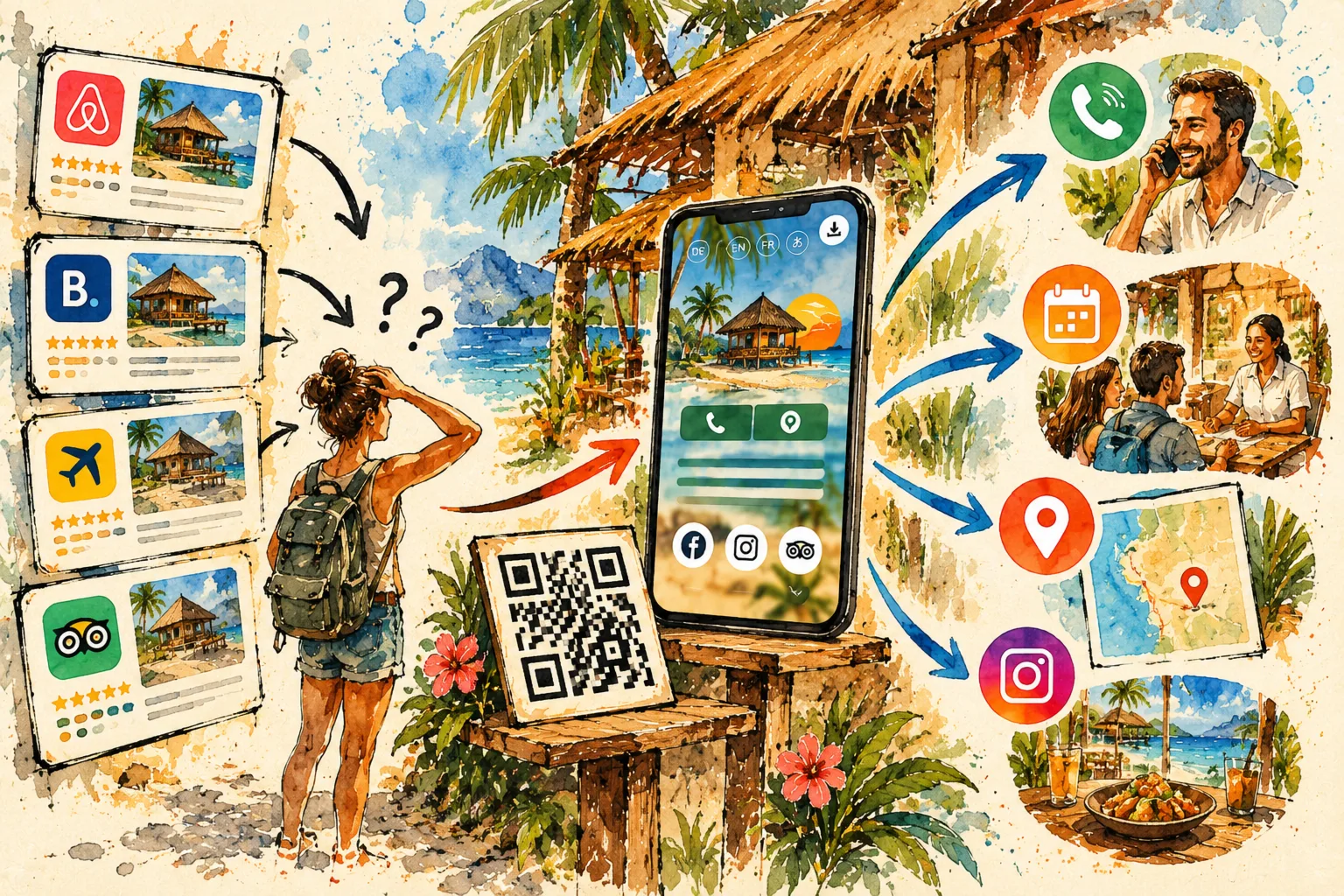
But should every visitor be sent straight to a third-party booking page, even if they only want your opening hours, a price estimate or a quick answer? Not necessarily. Your business benefits from having its own online starting point, whatever services you use behind the scenes.
1. A booking platform is one channel, not your whole business
An accommodation listing, a salon appointment page or a restaurant delivery profile is built around a particular task. It may not be the best place to explain everything else you offer.
A hotel might arrange airport transfers or local experiences. A restaurant might offer private dining, event menus and takeaway. A hair salon may want to show its services, accessibility details and examples of its work before someone chooses an appointment.
Your own web page can bring those details together. Visitors can then follow the booking link when they're ready.
2. Keep the freedom to change providers
Fees, features, visibility rules and commercial terms can change. Your business may eventually switch appointment systems, work with multiple booking partners or offer a different way to handle certain requests.
If a provider's link is printed on every flyer, business card and QR code, a change becomes awkward. If those materials lead to a stable page you control, you can update the destination behind a booking button without changing the address customers already know.
That doesn't make switching providers effortless, but it reduces one avoidable dependency: your public contact point is no longer tied to a single service.
3. Not every visitor is ready to book
Someone may want to know whether your restaurant has vegetarian options. Another visitor wants to ask whether children are welcome, check where to park or find a phone number. Sending them through a reservation flow can make a simple question unnecessarily difficult.
A useful business page gives visitors clear choices:
- Book using your preferred provider.
- Call or message with a specific question.
- Browse services or menus before deciding.
- Check location and opening hours without hunting through posts.
- Read in another language when a translation is available.
The next step should match the visitor's intention, not just the software your business uses.
4. Give printed QR codes a lasting destination
Imagine the QR code on a reception desk, window, brochure or hotel room card leading straight to a booking provider. If you change providers, that printed code may point to the wrong place.
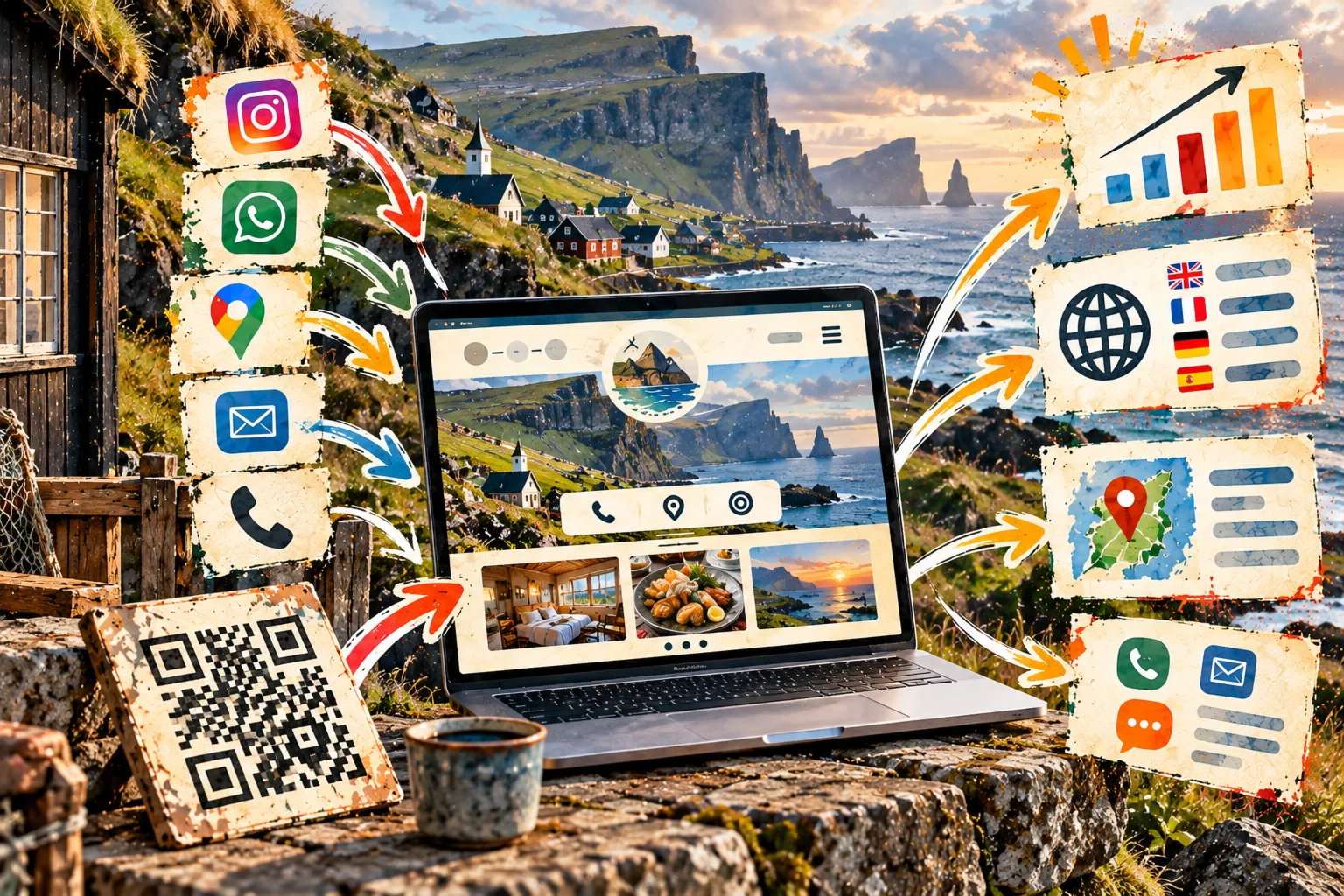
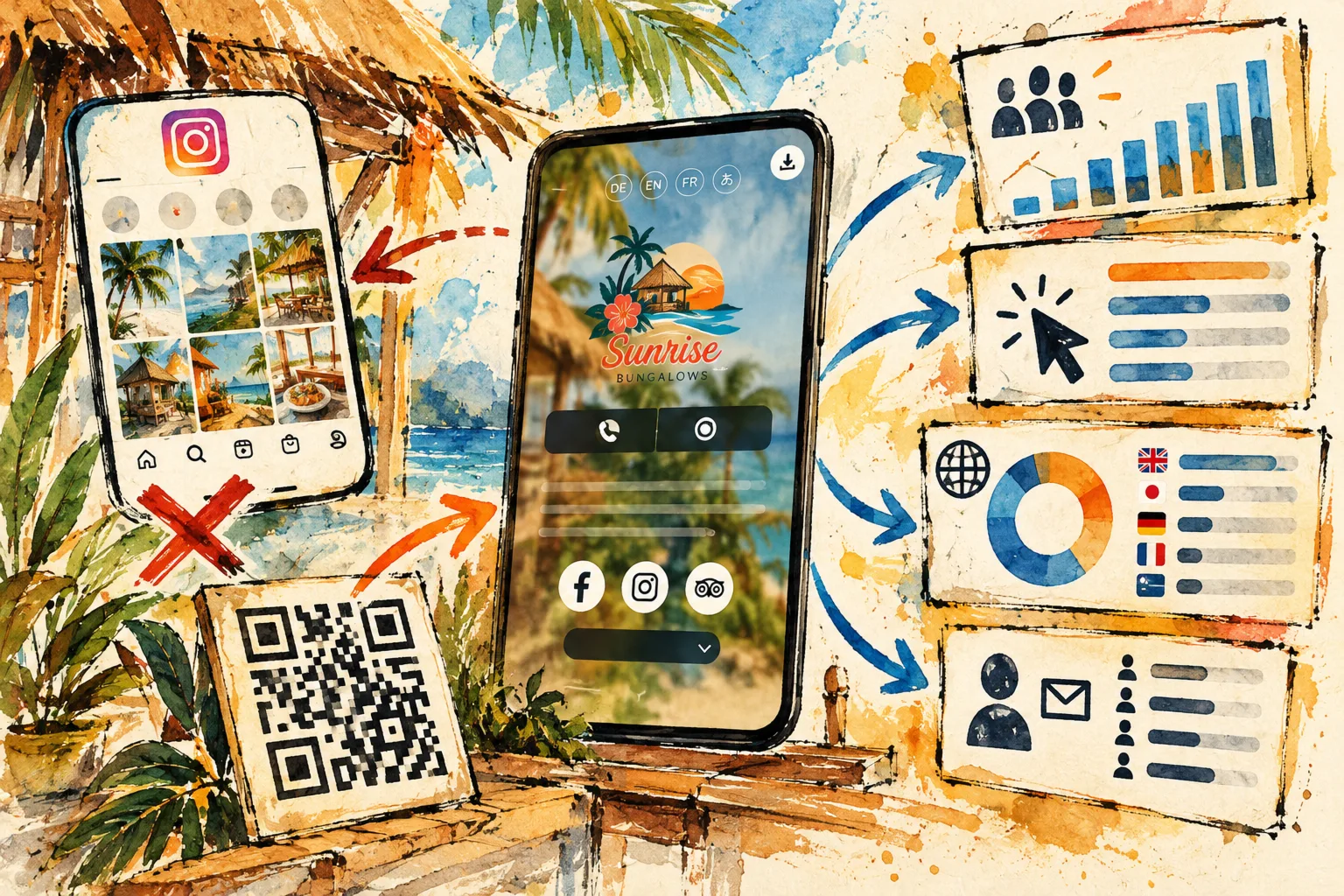
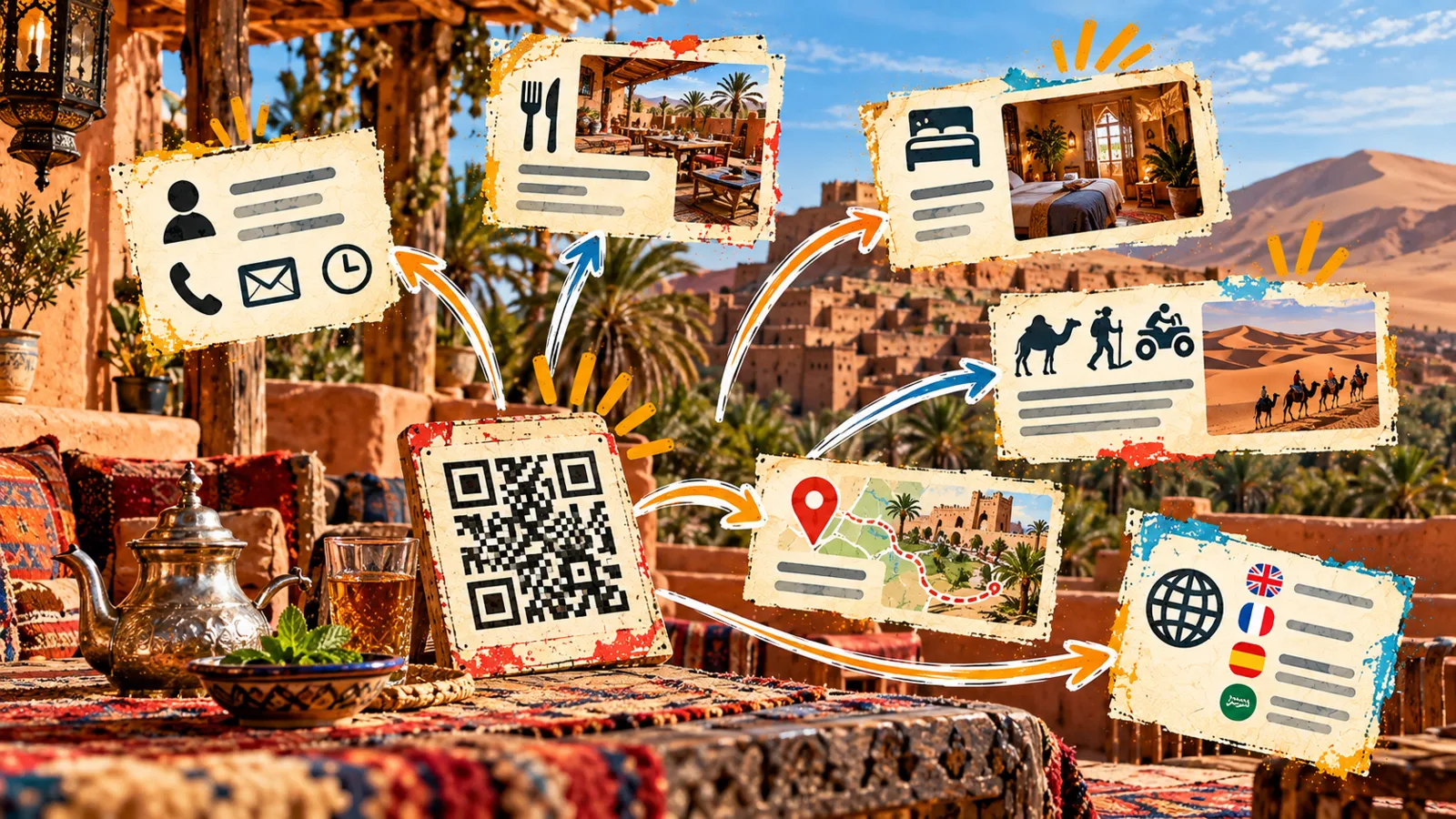
Instead, link it to a stable web page that presents your services and up-to-date buttons. Then you can change a booking link, add WhatsApp or highlight a new service without printing the QR code again, as long as the page address stays the same.
For small businesses that adapt their tools over time, that flexibility matters.
5. Use platforms where they genuinely help
This is not an argument for abandoning booking platforms. Their reach, payment features and operational tools may be extremely valuable. Direct booking is not always available or the right choice, depending on your customers, contracts and workflow.
The point is to separate the place people learn about your business from the service that processes a particular booking.
A guesthouse can offer a “Book on Booking” button, a separate contact route for group stays and useful arrival information on one page. A salon can link to its appointment service while still answering common questions and displaying its other services.
6. A practical way to get started
Write down the five questions customers ask most often. Build a page that answers them: what you offer, where you are, when you're available and how to book or get in touch.
Keep the links focused. Try the page on a phone and ask whether a first-time visitor could find the right action in seconds. Finally, use that page address on printed materials and QR codes.
One page, more freedom
With QLII, you can create a mini-site that gathers your services, contact options and booking links in one place. When your business evolves, you can update those destinations without starting your communication from scratch.
Customers are looking for your business, not for a particular platform. Give them a simple way in, then let them choose what they need.