
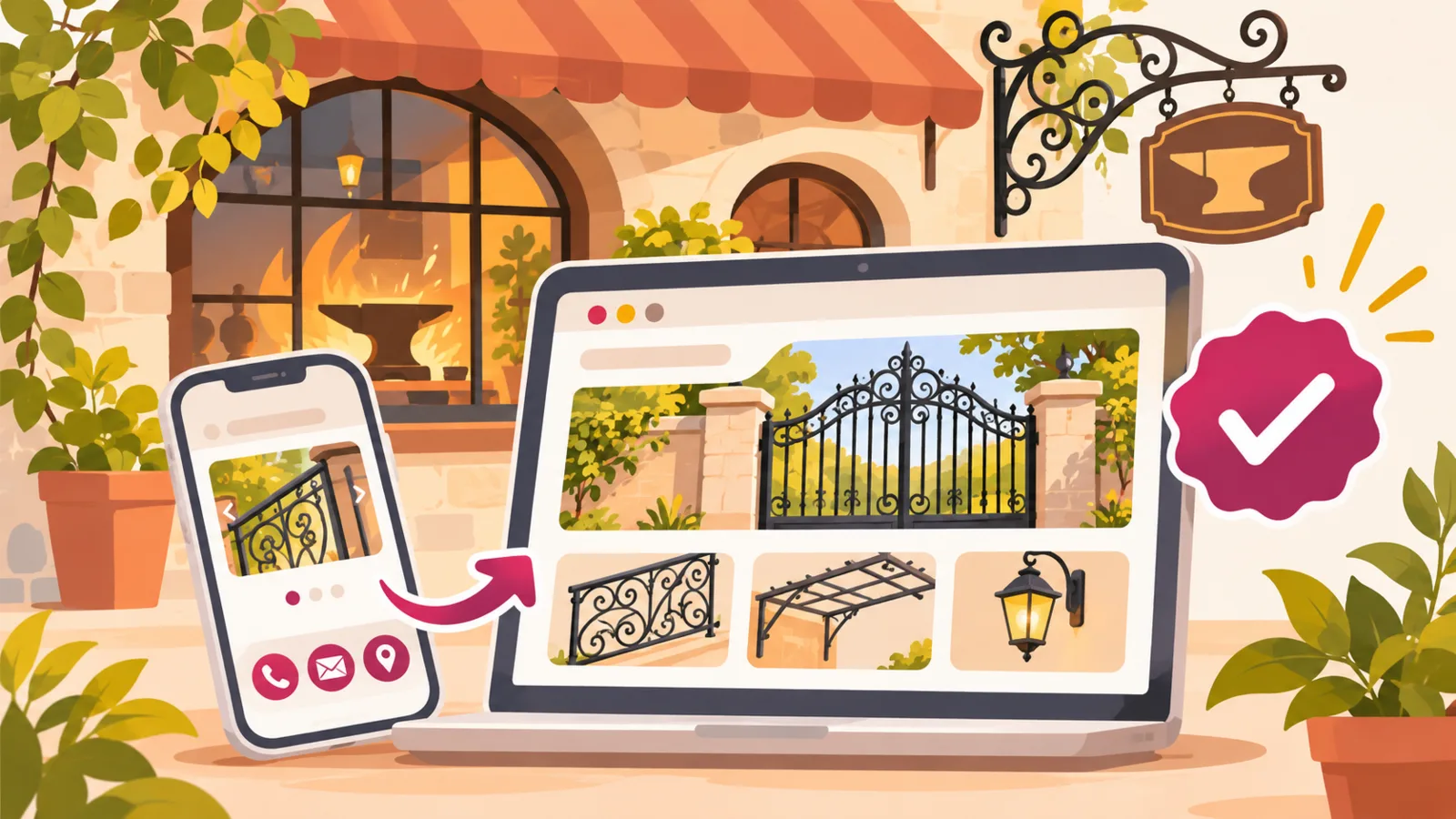
A business website that answers customers’ questions
Before requesting a quote, homeowners often want to know whether a wrought ironworker makes the type of item they need, works in their area, and how to share the details of their project. A business website should answer these questions quickly, without making visitors search through several menus.
For a craftsperson who makes custom gates, railings, staircases, or glass-and-metal partitions, the priority is to showcase their work and explain how a project takes shape. A clear page can also provide a starting point for contacting you through external services such as phone, email, a quote request form, or a business profile.
Describe your services and expertise
Be specific about what you make or restore. Instead of a general phrase like “wrought ironwork,” list the different types of work you offer, such as:
- metal gates and fencing;
- railings and stair handrails;
- glass-and-metal partitions and room dividers;
- wrought iron furniture or decorative objects;
- repairs and restoration of existing pieces, if you offer these services.
Mention the materials you work with, the finishes available, and the customization options. If you don’t take on certain types of work, say so clearly. This helps avoid enquiries that don’t match your business.
Showcase projects with helpful details
Photos help potential customers assess your style and the quality of your finishes. Add a short caption to each project to provide context: the type of item, material, finish, and the need it was designed to meet.
For example: “Custom powder-coated steel railing for an outdoor staircase near [town].” If the client gives you permission, you can describe the project’s requirements or show a stage of the fabrication process. Avoid generic images that don’t show your own work.
You can also link to your Instagram or Pinterest account, where you share more of your creations. These are external platforms, so make sure the essential information—your services, service area, and contact details—remains available on your business website.
Say where you work and how to request a quote
Name the towns, areas, or counties you serve. A specific description such as “Workshop in [town], serving the [area] region” is more useful than a vague statement like “serving everywhere.”
Next, explain the steps for requesting a quote. You can ask potential customers to provide:
- the type of item or work they’re looking for;
- approximate dimensions and the project location;
- their preferred materials or finishes, if known;
- their desired timeline;
- photos or a plan, if these would help clarify the request.
Provide a suitable way to get in touch: by phone, email, or a link to an external form. Share your usual availability or the response times you can reasonably meet, without promising a turnaround you can’t guarantee.
Build trust with verifiable information
List any qualifications, insurance, or accreditations you hold using their exact names and, if necessary, link to a source where they can be verified. Don’t claim a certification or guarantee that doesn’t apply to your business.
To help local customers find you, add a link to your Google Maps listing if you have one. Check that your workshop name, contact details, and opening hours match the information shown elsewhere.
Keep your online presence simple
A business website doesn’t need to be complex to be useful. An introduction to your workshop, a list of services, a few projects, your service areas, and clearly displayed contact details already make a solid foundation. If you sell a standardized item online, you can also direct visitors to an external shop such as Etsy. For custom work, explain how to get in touch and have a project assessed instead.
A mini-site such as QLII can bring together essential information and links to your profiles or external services. It doesn’t replace those platforms; it gives visitors a clear starting point to learn about your business and choose how to contact you.
FAQ
Should you list prices for custom pieces?
Not necessarily. The price often depends on the dimensions, material, finish, and installation. Explain what affects the quote and what information customers should provide to receive an estimate tailored to their project.
Is Instagram enough to showcase your work?
Instagram can showcase your creations, but a business website makes it easier to explain your services, service area, and contact options. You can use both and link them together.
What should you publish if you’re just starting out and have few completed projects to show?
Show pieces you’ve actually made, including workshop pieces or personal projects clearly identified as such. Explain the materials and fabrication steps, without suggesting that they were commissioned by customers if they weren’t.