7 practical ways to use a QR code in a small business
A QR code only works well when it leads to something people want. Printing one everywhere is not a strategy: the destination, placement and reason to scan must all make sense. Here are seven practical uses for shops, cafés and independent professionals.
1. A business card that stays useful
Put a code on your card or counter that opens your contact information and key links. When a phone number changes, update the page instead of replacing every printed card.
2. A menu people can read easily
For a café or restaurant, link to the current menu, allergy information or dietary choices. Keep another accessible option for customers who prefer not to use a phone.
3. Booking without a long search
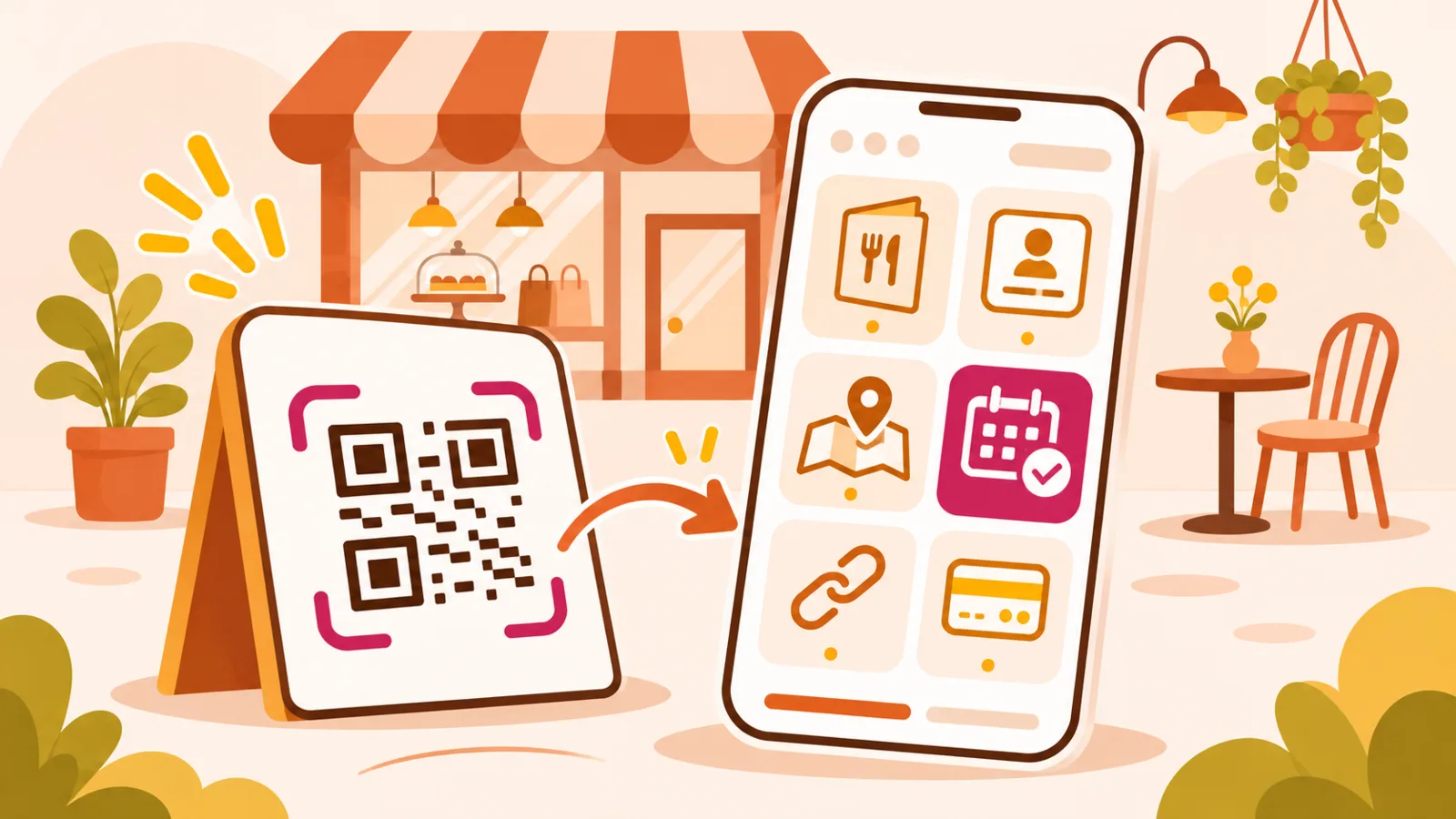
A code at reception, on a poster or in a brochure can lead to your page, where visitors choose the reservation tool relevant to their needs. Make the next step obvious.
4. Opening hours and directions
A code by the door can help customers find your hours, address and directions even when you are closed. Make sure the landing page loads quickly on mobile.
5. Contact after the visit
A receipt or takeaway bag can carry a code for future questions or contact details. Do not use it as an excuse for unsolicited marketing: the customer should choose whether to reconnect.
6. Other services worth discovering
A hairdresser might show treatments, a craftsperson previous work and an activity provider additional experiences. A structured page is more helpful than twenty links without explanation.
7. Information for international guests
In a tourist area, several language versions can remove friction. Check that your chosen plan supports translations; not every free plan does.
Test before you print
Scan using several phones, check contrast, verify the destination and include a label such as “View our menu”. QR codes are useful when they solve a real problem. See ideas for a simple business web page.